Recording in Nashville: What Independent Artists Should Know Before Making a Record
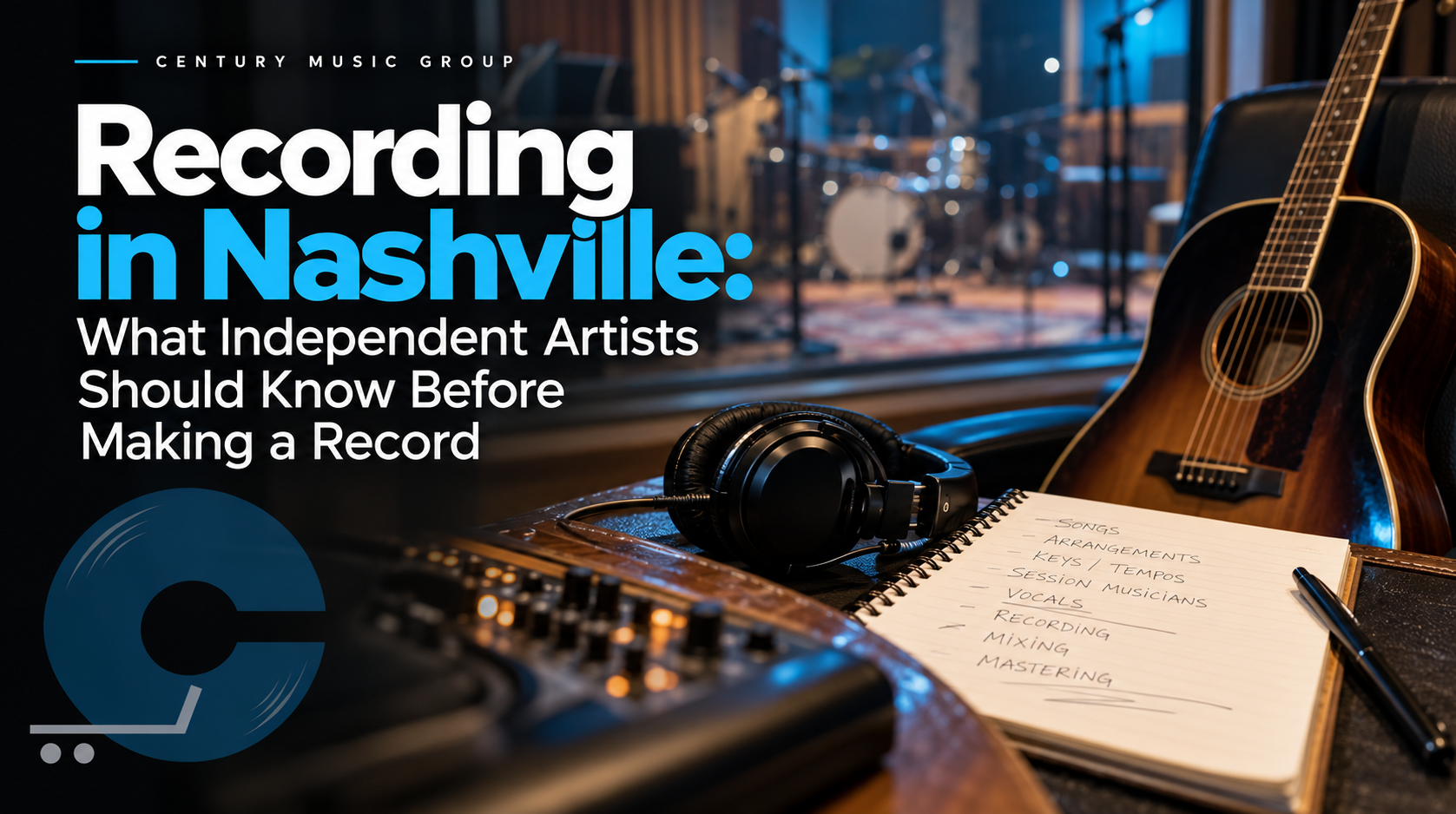
For independent recording artists, coming to Nashville to make a record can be an important step. The city is home to exceptional musicians, producers, engineers and recording facilities, along with a recording culture built around making records efficiently and at a high professional level.
But recording in Nashville involves more than booking a studio and showing up with a handful of songs.
The quality of the finished record depends on decisions made long before the first session: choosing the right songs, finding the right record producer, preparing arrangements, selecting musicians, making sure the songs are in the right keys, planning the sessions and understanding what you ultimately want the record to accomplish.
If you're an independent artist considering Nashville record production, here are some of the most important things to understand before you begin.
1. Start With the Songs
Production can elevate a great song, but it can't replace one.
Before deciding where to record or who should play on the project, take an objective look at the material:
Which songs best represent you as an artist?
Which ones still feel compelling after you’ve performed them dozens of times?
Which songs belong together on the same project?
A song that works well with just a voice and acoustic guitar often gives a producer a strong foundation to build from. A fully produced demo can also be useful, but it shouldn't necessarily dictate what the final recording becomes.
Reference tracks can help communicate what you're hearing—the energy, instrumentation, sonic character or emotional direction you're drawn to—but the objective shouldn't simply be to copy another artist's record.
The goal is to determine what serves your song and your identity as an artist.
This is also where an experienced producer can provide valuable perspective. Sometimes the song an artist assumes should be the centerpiece of a project isn't necessarily the strongest recording candidate. Sometimes a song needs structural changes, a different key, a different tempo or a completely different production approach.
Those decisions are much easier—and much less expensive—to make before the recording session begins.
2. Understand What a Record Producer Actually Does
One of the most important distinctions for an independent artist to understand is the difference between hiring a studio and working with a record producer.
A recording studio provides the physical environment and equipment needed to record music. An engineer handles the technical process of capturing, editing and working with the recorded audio.
The producer has a different responsibility.
The producer is responsible for helping guide the record creatively and bringing the various elements together into a finished recording.
Depending on the project, that can include:
Evaluating songs
Determining arrangements
Establishing keys and tempos
Selecting musicians and recording facilities
Directing musicians during the session
Guiding vocal performances
Making creative decisions during overdubs
Working with the engineering team through recording and mixing
Think of the producer as someone responsible for the record as a whole, rather than one individual component of it.
That's why searching for music production in Nashville is different from simply searching for studio time.
If you already have a producer and only need a room, a studio-for-hire may be exactly what you need.
If you're looking for someone to help shape and guide the project from the songs through the finished masters, you're looking for a production relationship.
3. Good Records Usually Begin With Pre-Production
Some of the most valuable work on a record happens before anyone presses Record.
Pre-production is where the producer and artist determine how the songs should be approached before bringing musicians into the studio.
That may include decisions about:
Song selection and sequence
Keys and tempos
Song structure and arrangements
Instrumentation
Intros, outros and transitions
Reference recordings
Vocal considerations
Session requirements
This preparation becomes especially important when working with professional Nashville session musicians.
Experienced session players can work remarkably quickly, but efficiency doesn't mean the creative decisions should be left until everyone is sitting in the studio.
The clearer the producer's vision going into the session, the more the musicians can focus on what they do best: interpreting the songs and creating performances that serve the artist.
4. Nashville Session Musicians Can Change What's Possible
One of Nashville's greatest recording resources is its community of professional session musicians.
Great session players aren't simply musicians with excellent technical ability. They understand how to listen to a song, interpret direction from a producer and create parts that support the vocal and the emotional purpose of the recording.
They also know when not to play. That's an important distinction.
A record doesn't become better simply because more notes, instruments or complicated parts are added. Often, the strongest contribution a musician can make is finding the simple part that makes the song feel complete.
Professional Nashville sessions also tend to move quickly. Experienced players are accustomed to hearing a song, working from charts or demos, taking direction and making adjustments in real time.
For independent recording artists who have primarily recorded themselves or worked in smaller local environments, hearing their songs performed by a first-call Nashville rhythm section for the first time can be a significant moment in the process.
But the musicians are only part of the equation. The producer still needs to make sure all those performances are moving toward the same creative destination.
5. Know What to Expect During the Recording Process
Every project is different, but professional Nashville record production generally involves several stages rather than one long recording session.
The foundation of the record often begins with tracking the core instruments. Depending on the music, that might include drums, bass, acoustic and electric guitars, keyboards and other instruments playing together.
The producer listens not only for technical accuracy but for feel, dynamics and whether the arrangement is supporting the song.
Additional instruments or parts may then be overdubbed where needed.
Throughout the process, decisions are constantly being made.
Does the second verse need to build?
Should the guitar part become simpler?
Does the chorus need more energy?
Is an instrument competing with the vocal?
Would removing something make the track stronger?
Professional production is often as much about knowing what to leave out as what to add.
Eventually, all of those decisions should result in a track that creates the right environment for the most important performance on most artist records: the lead vocal.
6. Your Lead Vocal Still Matters Most
World-class musicians, an experienced producer, a great engineer and an exceptional studio can't substitute for the artist's performance.
For singer-songwriters, the lead vocal is usually the center of the record. That makes vocal preparation essential.
Before coming to Nashville, you should be comfortable performing the songs consistently and know the lyrics thoroughly. The key should sit comfortably in your voice, not simply on your instrument. You should also understand where the emotional peaks of the song occur and how you want the lyric to communicate.
A producer may suggest changes in phrasing, dynamics, melody or delivery during the session. Those suggestions aren't necessarily about making the vocal more technically perfect. They're about finding the performance that makes the listener believe the song.
Don't exhaust your voice before a recording date trying to prepare at the last minute. Good preparation happens well before the session.
When it's time to record, you want to be able to concentrate on the performance rather than remembering the song.
7. Recording, Mixing and Mastering Are Different Stages
Artists sometimes use the terms recording, mixing and mastering interchangeably, but they serve different purposes.
RECORDING is the process of capturing the performances that make up the song.
MIXING takes those individual recorded elements and shapes them into the finished stereo mix. Levels, panning, EQ, compression, effects, automation and countless other decisions help determine how the listener ultimately experiences the record.
MASTERING is the final stage after the mix. It prepares the finished recording for release and helps create consistency across songs when the project contains multiple tracks.
Each stage affects the final result. That's why it can be useful to think about them as parts of one production process rather than unrelated services purchased independently.
A great mix can't completely rescue poor source recordings, and mastering can't fix fundamental problems with an arrangement, performance or mix. The quality of the finished master begins much earlier.
8. Budget for the Entire Record
When planning to record in Nashville, don't base your budget solely on the cost of studio time.
Professional record production can involve a producer, recording facility, engineer, assistant engineer, session musicians, editing, overdubs, mixing, mastering and other project-specific costs.
If you're traveling to Nashville, there may also be transportation, lodging and other expenses to consider.
Before committing to a project, understand what's included in the production arrangement, what isn't included and when payments are expected. You should also know what you'll receive when the project is finished and understand the agreement governing the production.
Most importantly, determine what you can realistically afford before beginning the project. Running out of budget halfway through a record can force creative compromises at exactly the wrong time.
Professional recording is an investment. The goal isn't necessarily to find the cheapest way to record a song. It's to understand what you're investing in and whether the production approach makes sense for where you are as an artist.
9. Choose the Right Nashville Record Producer
There are many talented Nashville music producers, and the right producer for one artist may not be right for another.
Credits and experience matter, but they aren't the only considerations.
Listen to the producer's work. More importantly, talk about how they approach records.
Do they understand what you're trying to accomplish?
Do they listen to your music before proposing a direction?
Can they explain their process?
Who will be involved in the sessions?
How are creative decisions made?
What is expected from you before recording begins?
What happens after tracking?
What does the production agreement cover?
Who owns the finished masters?
You should understand the answers to those questions before committing significant money or time to a project.
You should also be looking for someone who will tell you what the record needs—not simply agree with everything you say.
A good production relationship requires trust.
The artist brings the songs, voice, perspective and identity. The producer brings experience, objectivity and the ability to organize the people and resources needed to turn those elements into a finished record.
The best results usually happen when both sides respect what the other brings to the process.
10. Studio-for-Hire and Producer-Led Record Production Are Not the Same Thing
Neither approach is inherently better. They serve different needs.
If you already have a producer, arrangements, musicians and a detailed plan, you may simply need to hire a recording studio and engineer.
If you need someone responsible for guiding the project from preparation through the finished recordings, look for producer-led record production.
Understanding that distinction before contacting studios or producers can save considerable time.
Ask yourself:
Am I looking for a place to record, or am I looking for someone to produce my record?
For many independent artists, the answer to that question determines what kind of Nashville recording relationship they actually need.
11. Before You Come to Nashville: A Practical Checklist
Before beginning a professional recording project, make sure you can answer these questions:
Are the songs ready?
You don't necessarily need polished demos, but the writing should be far enough along for meaningful pre-production.Can you perform them confidently?
Especially the lead vocals.Do you know what you want the record to accomplish?
A single intended for release may call for different decisions than a collection of demos or a full album.Do you have reference tracks?
A few well-chosen references can help communicate direction without forcing your music to imitate someone else's.Have you chosen the right producer?
Understand their role, process and approach.Do you understand the budget?
Know what the production includes and account for travel and other expenses if necessary.Have you discussed ownership and deliverables?
Know what you're paying for and what you'll receive.Are you open to collaboration?
If you've hired experienced people, give them room to contribute. You don't have to accept every suggestion, but you should be willing to explore ideas.
Preparation allows the actual recording sessions to be about making music rather than solving problems that could have been addressed weeks earlier.
Making the Right Record in Nashville
Nashville offers independent artists access to an extraordinary concentration of musicians, producers, engineers and professional recording facilities.
But access to those resources isn't what makes a great record. What matters is how they're brought together.
The right songs, thoughtful pre-production, the right producer, great musicians, strong engineering and an artist capable of delivering an authentic performance all contribute to the finished result.
Century Music Group is a producer-led Nashville music company working with select independent recording singer-songwriters to create major-label-caliber records. Professional record production is our core business, bringing together first-call Nashville session musicians, Grammy-nominated engineers and professional Nashville recording facilities around each project.
Every relationship begins with the record. For select artists, that relationship may develop further when there is a mutual creative and business fit.
If you're an independent recording artist considering making your next record in Nashville, learn more about Century Music Group Record Production and our approach to the recording process.
If you believe your music may be a fit for Century Music Group: